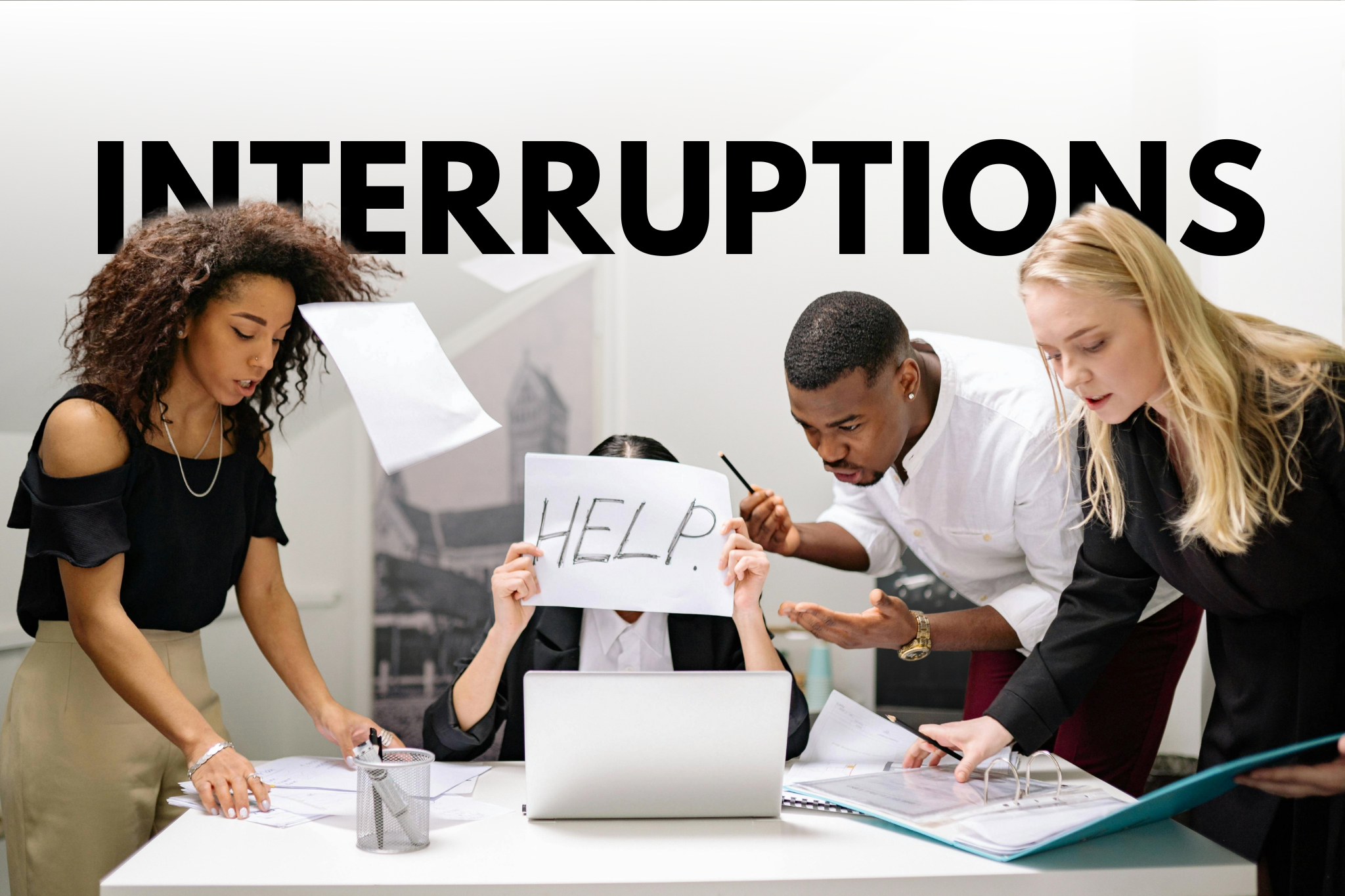
In today’s hyper-connected workplace, constant interruptions have become the norm rather than the exception. Whether it’s unexpected phone calls, unscheduled meetings, or the constant ping of notifications, maintaining focus has never been more challenging. However, with the right strategies, you can reclaim your time and dramatically increase your productivity even in the most demanding environments.
The Power of Strategic Morning Focus
Your morning hours are your secret weapon for deep work. Before the world wakes up and the interruptions begin, you have a golden window of opportunity. Schedule your most demanding cognitive tasks for early mornings when your mental energy is at its peak and the likelihood of interruptions is at its lowest.
The older I get, the more I realize you can get pretty damn far in life by just doing what most people avoid. Wake up early. Focus deeply. Move your body. Eat real foods. Obsess over one thing. Read old books. Be present. Have difficult conversations. The recipe for a good life.
— Sahil Bloom (@SahilBloom) October 17, 2025
This isn’t about waking up at an unreasonable hour. It’s about recognizing that certain tasks requiring extreme focus, complex problem-solving, or creative thinking deserve to be protected. When most people are still getting their day started, you’re already making significant progress on work that truly moves the needle.
Stop Micromanaging: The Art of Strategic Delegation
One of the biggest productivity killers is the belief that you must personally handle every detail. Micromanagement doesn’t just waste your time, it creates bottlenecks that slow down your entire team. By delegating effectively, you accomplish two critical goals: you reduce the number of people constantly needing your input, while ensuring that service delivery and correspondence continue seamlessly.
Delegation isn’t about dumping work on others. It’s about empowering your team to handle tasks within their capability, freeing you to focus on high-impact activities that genuinely require your expertise. The result is a more efficient operation where you’re accessible when it truly matters, not constantly firefighting minor issues.
Time Blocking: Creating Islands of Focus
Time blocking transforms your calendar from a passive record of events into an active defense against distraction. The concept is simple but powerful: designate specific time blocks for specific tasks, treating these appointments with yourself as seriously as you would a meeting with your most important client.
During these blocked periods, you operate with zero to minimal interruptions. This doesn’t mean being inflexible. Life happens, and unexpected developments will arise. The key is having a plan while allowing room for flexibility to accommodate sudden free time or genuine emergencies. Without a plan, every interruption feels equally urgent. With time blocking, you can quickly assess whether something truly needs immediate attention or can wait until your next available slot.
The Two-Minute Rule: Defeating Procrastination
When something can be completed in two minutes or less, do it immediately. This simple rule prevents small tasks from accumulating into an overwhelming backlog. That quick email response, that brief phone call, that simple approval, when you handle these immediately, you’re not just clearing your plate, you’re preventing them from cluttering your mental space and consuming your future time.
The rationale is straightforward: the mental overhead of tracking a tiny task often exceeds the effort required to just complete it. By addressing quick wins immediately, you maintain momentum and create psychological wins throughout your day.
Solutions Over Ideas: The Problem-Solving Mindset
There’s a world of difference between discussing problems and discussing solutions. Meetings where people simply list challenges are energy drains that rarely lead to progress. Instead, cultivate a culture where conversations focus on problem-solving rather than problem identification.
Avoid a single meeting on a problem. Instead, have two separate meetings:
— Cory House (@housecor) October 22, 2023
Meeting 1 – Define the problem.
Meeting 2 – Decide how to fix the problem.
Here’s why:
✅ The first meeting assures everyone understands the problem. This avoids people jumping to suggestions before we…
When issues arise, train yourself and your team to come prepared with potential solutions. This doesn’t mean you need to have the perfect answer, but bringing possibilities to the table accelerates decision-making and demonstrates proactive thinking. Additionally, systemize recurring tasks to plug efficiency gaps. When you notice yourself repeatedly handling the same type of situation, create a system or process that reduces the cognitive load for future instances.
Guard Your Time Like Your Most Valuable Asset
Because it is. Not every meeting needs to happen, and not every meeting that needs to happen requires your attendance. Be ruthless in evaluating whether a gathering is truly necessary or if the same outcome could be achieved through a quick call, a Zoom meeting, or even an email thread.
The currency of life isn’t money. It is not even time. It’s attention.
— Naval (@naval) February 11, 2025
Equally important is managing overstimulation from phones and other media. Every notification is a potential derailment of your focus. Turn off non-essential alerts, batch-check messages at designated times, and create environments where deep concentration is possible. The goal isn’t to become unreachable, it’s to be reachable on your terms, when you’re in a position to respond thoughtfully rather than reactively.
Match Conversation Length to Purpose
Not all conversations should be treated equally. Long conversations are valuable for planning, strategizing, and idea generation, where exploration and thoroughness matter. These are investments in clarity and alignment that pay dividends later.
Short conversations, on the other hand, are perfect for decision-making. When you’ve already done the groundwork, a brief exchange can crystallize choices and move projects forward. Understanding this distinction helps you allocate your conversational time appropriately and prevents meetings from expanding to fill available time without adding proportional value.
The Decisive Advantage
Indecision is a silent productivity killer. Every hour spent in back-and-forth deliberation is an hour not spent executing. Being decisive doesn’t mean being reckless, it means gathering sufficient information, making a reasoned judgment, and committing to a direction.
A made decision, even if it needs minor adjustments later, saves countless hours of circular discussions and analysis paralysis. For leaders, this principle extends to your team. Train employees not just to identify problems but to bring them forward with potential solutions already considered. This shifts the conversation from “What should we do?” to “Which of these approaches makes the most sense?” dramatically accelerating your ability to maintain momentum even when challenges arise.
Conclusion: Productivity in the Real World
Managing productivity with constant interruptions isn’t about achieving perfect focus in a distraction-free environment. It’s about building systems and habits that allow you to maintain effectiveness in the real, messy, interrupt-filled world we actually inhabit.
By protecting your peak hours, delegating strategically, blocking time intentionally, acting on quick wins, focusing on solutions, guarding your time, matching conversation style to purpose, and making decisive choices, you create a framework that doesn’t just survive interruptions, it thrives despite them.
The professionals who excel aren’t those who eliminate all distractions. They’re the ones who have learned to work effectively with the reality of modern work life, maintaining focus and momentum even when the world constantly demands their attention.
FAQs
How can busy professionals stay productive with constant interruptions at work?
Busy professionals can stay productive by shifting from rigid time-based planning to interruption-resilient productivity systems. This includes task prioritization frameworks, micro-work sessions, and centralized task management tools that reduce context switching.
What are the best productivity tools for managing interruptions?
The best productivity tools help consolidate tasks, notes, and schedules into a single workspace. Platforms like all-in-one productivity software reduce tool overload, minimize notifications, and support asynchronous work.
How do interruptions affect productivity and work performance?
Frequent interruptions increase cognitive load, slow task completion, and reduce deep focus. Research shows that it can take several minutes to regain concentration after each interruption, significantly lowering overall productivity.
What is the most effective productivity system for knowledge workers?
An effective productivity system for knowledge workers connects thinking, planning, and execution. Systems that integrate note-taking, task management, and review cycles help professionals turn information into action without mental overload.
How can I reduce distractions without missing important messages?
Reducing distractions doesn’t mean disconnecting entirely. Smart notification management, scheduled communication windows, and asynchronous collaboration strategies allow professionals to stay responsive while protecting focus time.
Is time management or energy management better for productivity?
Energy management is often more effective than time management. Structuring work around high-energy periods enables deeper focus and better decision-making, especially in interruption-heavy environments.
References
ActivTrak (2025) 2025 State of the Workplace Report. Available at: https://www.activtrak.com/resources/reports/state-of-the-workplace/ (Accessed: 18 December 2025).
Deloitte (2024) Productivity+ Trends in the Workplace. Available at: https://www2.deloitte.com/us/en/blog/human-capital-blog/2024/improving-employee-experience-and-productivity.html (Accessed: 18 December 2025).
Parker, S.L., Jimmieson, N.L. and Amiot, C.E. (2024) ‘Effects of perceived illegitimacy of interrupting tasks on employees’ cognitive and affective experiences: the mediating role of stress appraisals’, European Journal of Work and Organizational Psychology, 33(4), pp. 456-470. doi: 10.1080/1359432X.2024.2319904.
Rick, V.B., Brandl, C., Mertens, A. and Nitsch, V. (2024) ‘Work interruptions of office workers: The influence of the complexity of primary work tasks on the perception of interruptions’, Work, 77(1), pp. 185-196. doi: 10.3233/WOR-220684.